One of the most popular games in the world, Counter-Strike 2 (CS2), has seen its marketplace lose roughly half its market capitalization since October 2025, with estimates of declining values for in-game items and skins starting at $3.9 billion per CSMarketCap or up to $4.6 billion per Pricempire.
For years, players earned, traded, and collected in-game items like weapons skins, with game maker Valve deferring to active, secondary marketplaces for players to buy and cash out digital assets.
Resale values dropped in late 2025 and haven’t looked back.
Down between 44% and 49% from its $8.7-10.4 billion peak in October 2025, depending on the estimation methodology, many factors are weighing on prices for this historically exclusive collectible market.
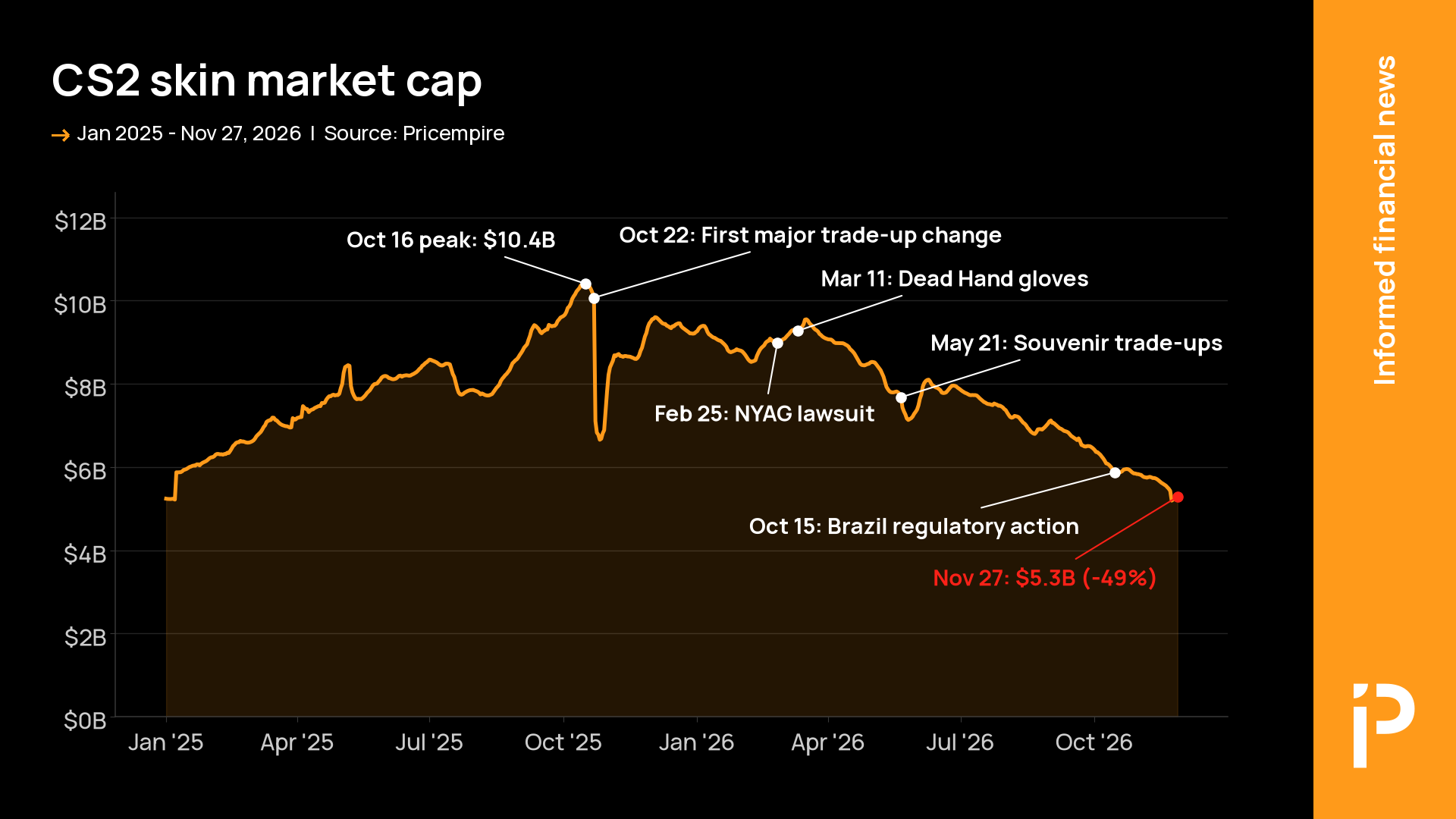
Over a year of declining CS2 resale values
Changes by game maker Valve have dramatically diluted the supply of rare items and raised concerns about player age verification, accurate player counts, venue closures, item crafting practices, loot box legal compliance, and trust in the sustainability of resale values.
For example, on March 11, 2026, Valve flooded the CS2 in-game glove skin market by releasing 22 new finishes via weekly Dead Hand Terminals.
On May 21, 2026, it unlocked previously restricted Souvenir skins for use in trade-up contracts, further expanding the pool of cheap inputs used to craft higher-tier items.
October alone erased roughly half a billion dollars, or more than 8% of the game’s market cap. The entire year has seen a steady decline, with every tracked category of in-game CS2 item on CSMarketCap cheaper now than in January.
Changes by Valve have earned criticism by CS2 competition teams around the globe. 9z CEO Francisco Postiglione warned that competition staff were missing compensation, BetBoom CEO Artem Saveliev complained about in-game sticker sales declining to a “pittance,” and FURIA’s Gabriel Toledo, aka FALLEN, rattled off a litany of complaints.
Read more: Polymarket Counter-Strike promos start at $20 per X post, report
On February 25, the New York Attorney General sued Valve over “promoting illegal gambling” through CS2, with regulatory pressure widening outside the US last month. On October 15, Brazil’s Ministry of Justice and Public Security asked its National Data Protection Authority to monitor CS2 for age verification.
Meanwhile, active player demand has eroded across the year despite numerous attempts by Valve to improve the game.
SteamCharts shows average concurrent gameplayers declining for eight consecutive months from 1 million in February to 800,00 in October.
Supply dilution and more gambling lawsuits
Even as buyers retreated, Valve flooded supply of in-game items. Weekly drops, Armory collections, and offer-based Terminals, including March’s Dead Hand Terminal adding 22 gloves, flooded a cooling market for in-game prices.
Third-party trading venues also folded amid tightening rules and operating struggles. SkinBid entered bankruptcy in November 2025, GamerPay shut down in May, and BitSkins announced that it would close in May.
Private party lawsuits in Washington like Flauto et al v. Valve have alleged illegal gambling, alongside Galas v. Valve seeking financial damages.
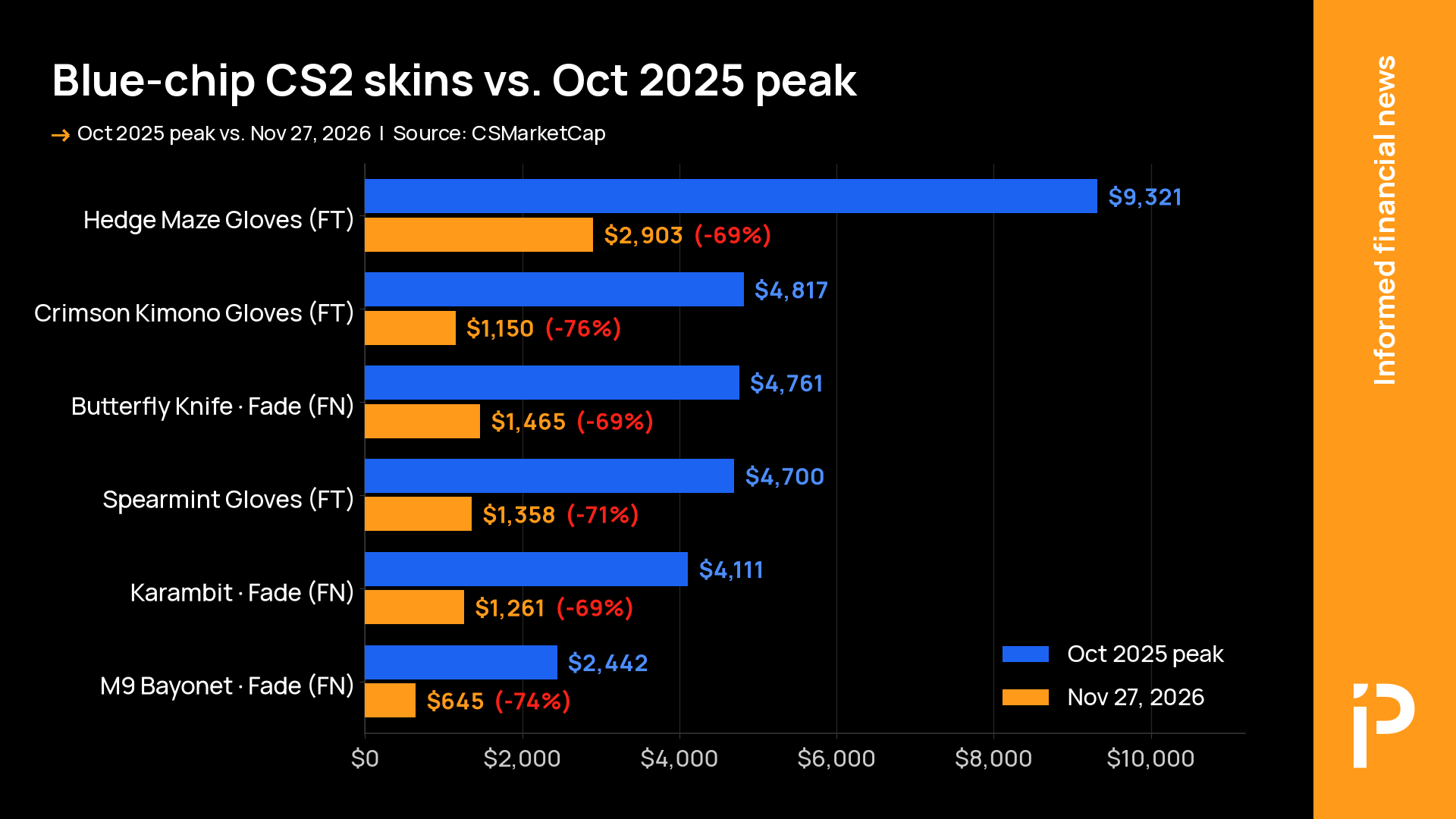
All of these setbacks have exacerbated cracks in CS2 values that started in late October 2025, when Valve devastated collectors by allowing the conversion of five Covert finishes into knives or gloves.
A flood of item-crafting activity decimated scarcity values, pushing budget knives and gloves to their lowest monthly Steam resale levels in seven years.
Ultimately, CS2 has never recovered from that October rarity scandal, which seems to have permanently shattered a decade of collectors’ faith.
As opposed to a long-term uptrend, collectors now price CS2 skins knowing that Valve may rewrite scarcity values with the flick of a switch.
Got a tip? Send us an email securely via Protos Leaks. For more informed news and investigations, follow us on X, Bluesky, and Google News, or subscribe to our YouTube channel.