
Michael Saylor’s Strategy sheds $6 billion in a day — again
On March 20, 2000, Strategy (formerly MicroStrategy) co-founder and then-CEO Michael Saylor lost $6 billion in one day — more money than any public company executive had ever previously lost in a single day.
He — and Strategy shareholders — lost even more yesterday.
Strategy opened for trading yesterday at a 52-week low after missing out on a $33 billion profit. Somehow, things got even worse by dinnertime.
By 5pm, Saylor’s company admitted to losing $42.93 per share of MSTR in diluted earnings within the final three months of 2025. The stock also declined another 20% to below $102 — incinerating another $7 billion in market capitalization within 24 hours.
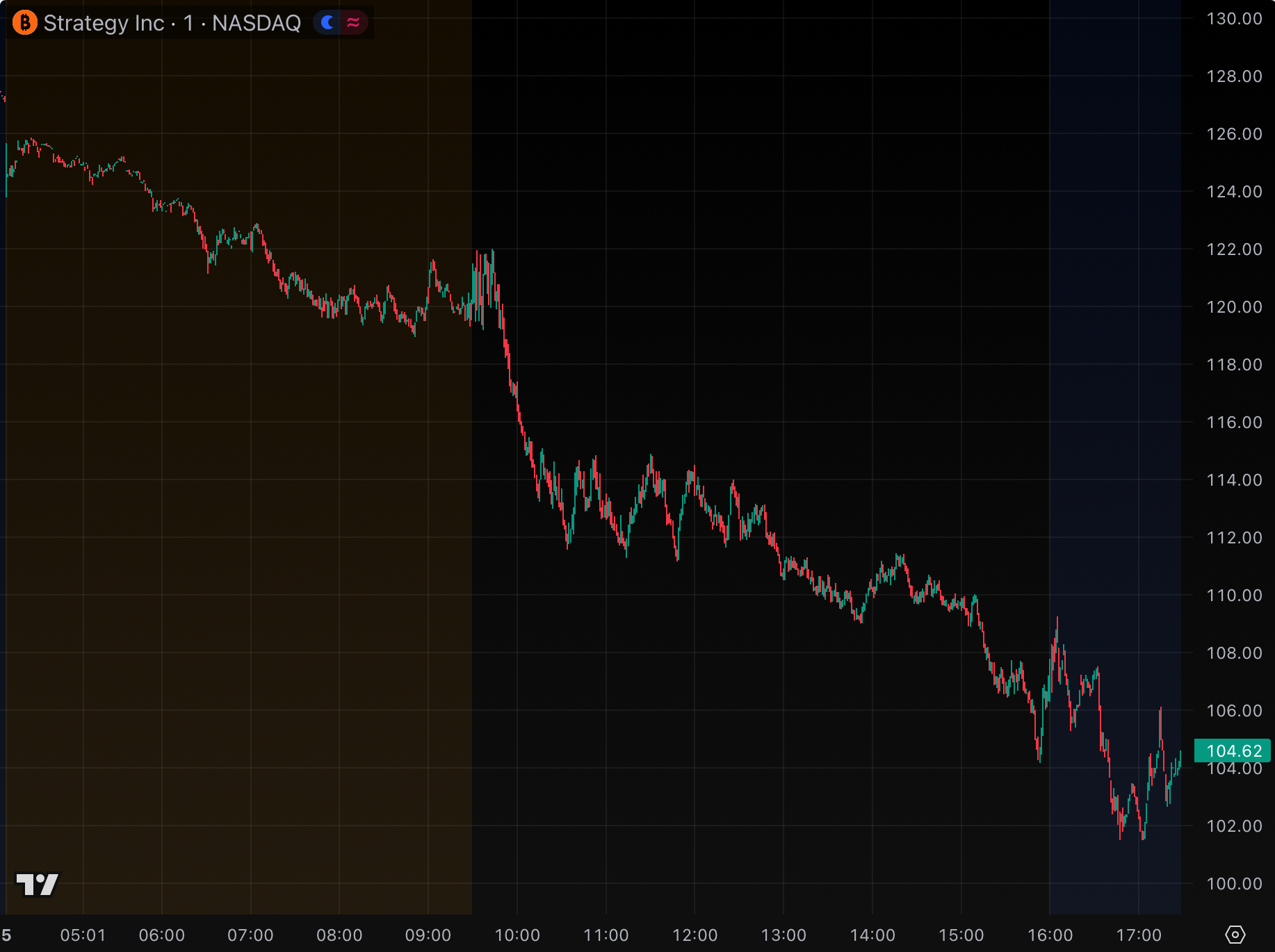
With a share price of just $102, the company posted a $15.23 per share loss for the 2025 calendar year.
$6 billion in more missed profit
The bad news continued. The foregone $33 billion profit that it had missed out on by Wednesday night had turned into a $39 billion missed profit just 24 hours later.
Strategy’s ex-general counsel Shao Wei-Ming sold another 3,000 shares of MSTR. The company posted an operating loss of $17.4 billion for Q4 2025 — 16.4x higher than Q4 of the prior year.
Its net loss per common share on a diluted basis was $42.93, as mentioned above, which calculates to a year-over-year increase of 1,316% in the wrong direction.
Dilution of MSTR continues
Its capital-raising abilities showed continued reliance on common stock dilution — despite months of attempts by management to switch the mix toward preferred shares.
From October 1, 2025 through February 1, 2026, the company’s at-the-market share sales relied on MSTR dilution for 79%: $7.8 billion compared to just $1.6 billion from preferreds.
Worse, revenues from product licenses from the company’s actual operating business, enterprise software sales, plummeted 48% from $15.2 million in Q4 2024 to less than $7.8 million in Q4 2025.
Revenue lines labeled Product Support and Other Services also declined, with only Subscription Services posting a year-over-year increase. General and Administrative costs also ticked higher.
Read more: Michael Saylor doesn’t believe BTC is digital money
Dividend payments to preferred shareholders — which did not exist in 2024 — dragged another $381.3 million out of the company in 2025.
The company’s flagship series of preferred, Stretch, which is the top focus of the company’s “laser-eyed” devotion, closed trading yesterday 6.3% below its intended $100 price, despite paying an 11.25% dividend and running X ads to motivate demand.
The company’s bitcoin (BTC) yield, a measure of management’s ability to accrete BTC per share by operating a good business and avoiding MSTR dilution, has slowed to a crawl in 2026.
As of February 1, BTC yield for common shareholders is just 0.3% year-to-date, which compares with formerly impressive figures of 7.3% in 2022, 74.3% in 2023, and 22.8% in 2024.
Got a tip? Send us an email securely via Protos Leaks. For more informed news and investigations, follow us on X, Bluesky, and Google News, or subscribe to our YouTube channel.