
Strategy market cap down 40% after pivot from bonds to preferreds

Strategy (formerly MicroStrategy) has shed 40% of its market capitalization since founder Michael Saylor stopped selling bonds on February 21 last year, ending traditional debt sales in favor of preferreds.
Since December 11, 2020, the company had been issuing senior notes requiring cash payments to bondholders, plus repayment of principal in cash or stock at or before maturity.
It bought bitcoin (BTC) with the proceeds of these bond offerings and sold additional bonds through February 21.
Appetite from bond investors was initially strong due to the novelty of a highly creditworthy public company enjoying strong investor support. Indeed, Strategy’s common stock tripled in value from $29 to $100 per share within two months of its first bond offering on December 11, 2020 and increased 1,000% by its final issuance.
As long as equity investors were willing to support the company’s cash-raising abilities, bond investors were happy to fund its debt.
However, by January 31, 2025, Saylor began forecasting the end of bonds.
He wanted to switch to a new instrument — dividend-paying preferred shares — which would allow the company to raise similar amounts of capital yet skip principal repayment altogether.
Strategy preferreds felt better than bonds, at first
At first, the idea seemed appealing to shareholders of the company’s common stock, MSTR. Unlike bonds, sales of preferred shares wouldn’t impose an overhang of principal repayment.
Moreover, unlike at-the-market (ATM) sales of MSTR, preferreds wouldn’t immediately dilute commons.
Instead of principal repayment to bondholders, Saylor promised to pay dividends forever to preferred shareholders. In exchange for on-time coupon payments, he promised higher interest rates to preferreds, albeit with some flexibility on timing if the board of directors ever sensed a crisis.
Sales of preferreds allowed Saylor to buy BTC immediately and never have to repay that initial principal. What could go wrong?
Read more: Strategy’s bitcoin premium vanishes as mNAV crashes to 1x
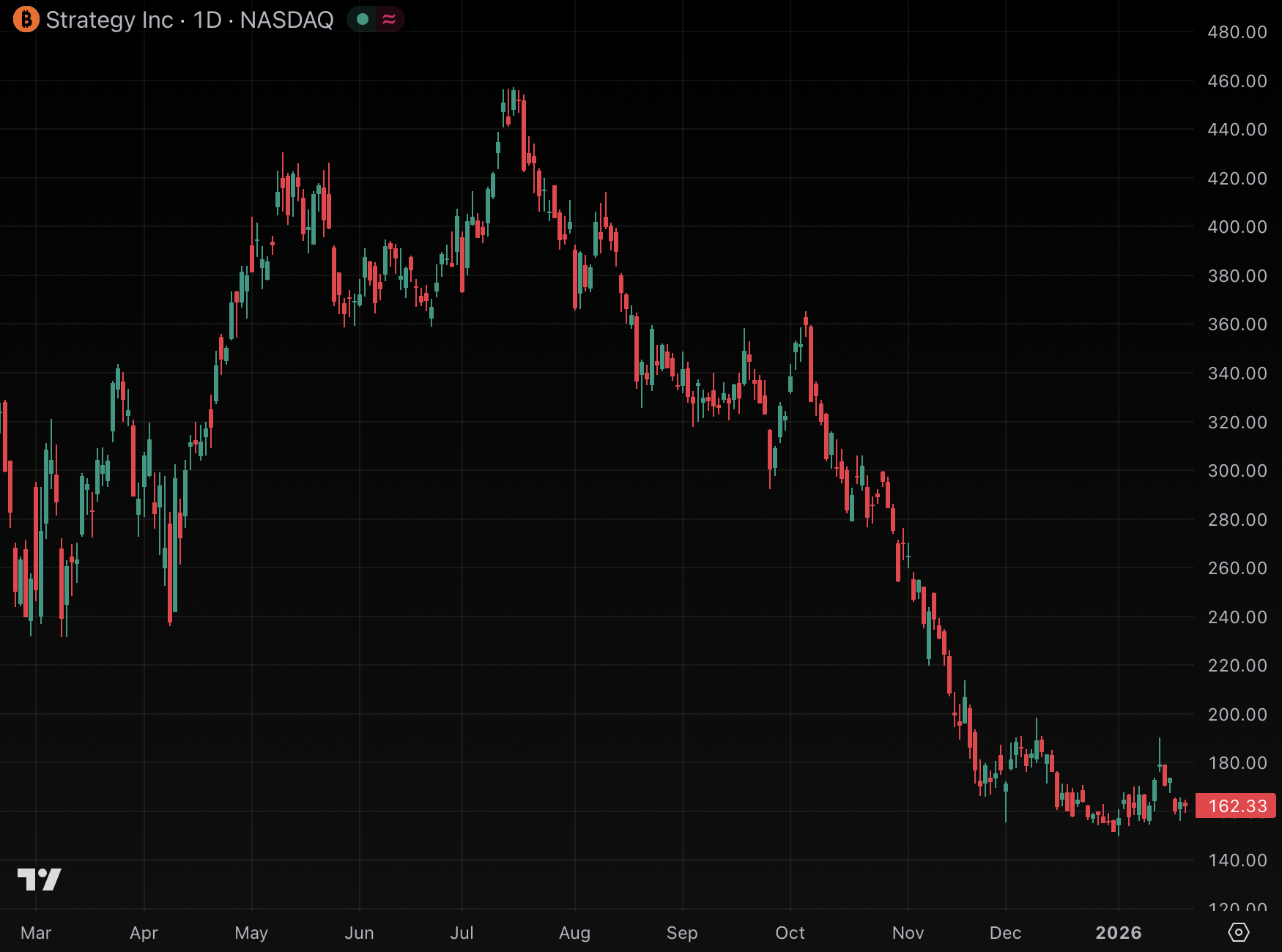
During the first few months after their introduction, sales of preferreds boosted Strategy’s MSTR slightly from $350 per share on January 31 to a 2025 high of $457 by July.
Investor sentiment was optimistic, with plenty of short-term benefits to shroud the mounting future obligations of dividend payments that would never end.
Market cap is down since Strategy pivoted from bonds
Eventually, of course, investors realized that preferred dividend obligations never end.
There are basic mathematics to analyze the net present value of those future cash flows — and the math was not pretty.
Although many investors skipped that homework during Saylor’s early pivot from bonds to preferreds, they eventually figured it out.
Measured from any date range, the pivot has clearly failed to boost the company’s market cap. Since its July high, MSTR has declined 64% and since Saylor began selling preferreds on January 31, it’s down 52%.
Got a tip? Send us an email securely via Protos Leaks. For more informed news, follow us on X, Bluesky, and Google News, or subscribe to our YouTube channel.