SpaceX slipped below $140 per share on Monday, wiping out $1 trillion from the peak market capitalization of Elon Musk’s IPO.
Since the manic peak three days into its life as a public company, SpaceX has declined from a market cap of $2.9 trillion to under $1.8 trillion today.
SpaceX priced the most expensive IPO in history at $135 per share on June 11, selling 555,555,555 shares to raise roughly $75 billion.
The stock opened at $150 the next morning and closed its first day at $160.95, a 19% gain over the offering price.
It kept going up for two more days but has crashed ever since.
$1 trillion vaporized
By June 16, its third day of trading, SpaceX closed at $201.80 and touched an intraday high of $225.64, a valuation of $2.95 trillion that briefly vaulted Musk’s company past Amazon, Microsoft, and other giants.
At time of writing, SpaceX has fallen to eighth place on the leaderboard of public companies.
Fueling SpaceX’s three-day run was excitement about futuristic plans to colonize Mars, acres of non-existent space data centers, and a $60 billion deal to buy AI coding startup Cursor — announced the same day the stock price peaked.
Back below $140 per share as of midday today, SpaceX now has a slightly more modest market capitalization near $1.8 trillion. Measured against its intraday peak on June 16, the company has lost $1.1 trillion in drawdown, a decline of roughly 38%.
To be fair, any insider who was able to buy at the IPO price of $135 is still about 3% in the green, although shares are 7% below its $150 debut open on public exchanges for ordinary investors.
Still, 7% is far more manageable than 38%. Those people, who waited until the third day to buy, are underwater at a concerning depth.
Read more: Hyperliquid SpaceX perp plummeted before Blue Origin explosion
Skeptical of SpaceX’s valuation
Michael Burry, skeptical investor of The Big Short fame, wrote that “nothing in that S-1 suggests it is worth $1 trillion let alone $2 trillion.” The filing showed 2025 revenue of $18.7 billion against a net loss of $4.9 billion.
In the end, Burry explored a short sale of SpaceX yet ultimately walked away, concluding that borrowing fees and options premiums made betting against the stock too costly.
Morningstar, meanwhile, pegged fair value at $63 a share at the IPO, less than half the offering price and well under a third of the June peak.
Unfortunately, none of that skepticism prevented the initial exuberance, and none of it stopped the dramatic reversal.
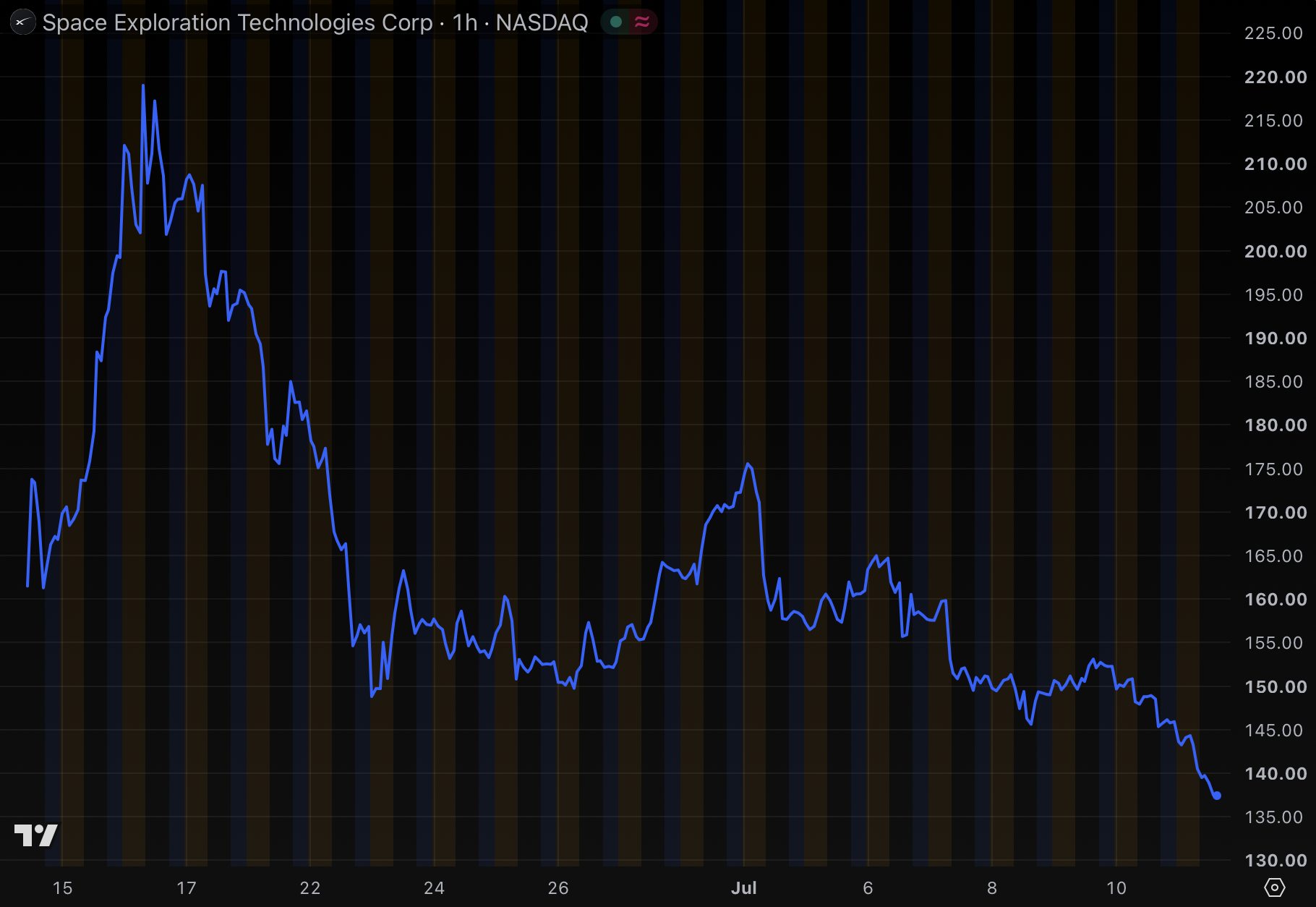
SpaceX fell 16% on June 22 to close at $154.60, its worst session since the debut. Its long-awaited addition to the Nasdaq 100 index on July 7, an event that hands a stock a wave of automatic passive buying, instead greeted it with a drop exceeding 6% as investors who had bought the rumor sold the news.
As usual, there are two sides to every story. Oppenheimer raised its target to $250, and other banks initiated coverage with targets ranging up to $300, including a $25 price target raise today from Jefferies.
Got a tip? Send us an email securely via Protos Leaks. For more informed news and investigations, follow us on X, Bluesky, and Google News, or subscribe to our YouTube channel.