
European Union sanctions Justin Sun’s HTX
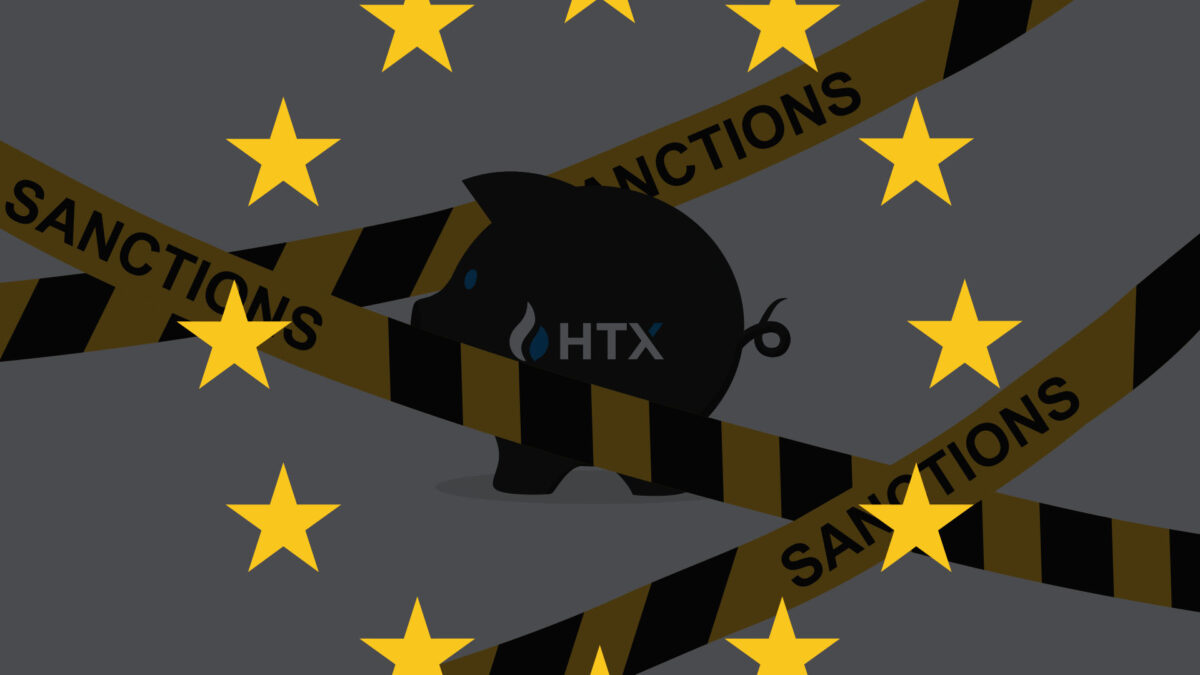
The Council of the European Union has sanctioned Justin Sun-owned HTX and Huobi Global S.A in a move that it hopes will “further cripple Russia’s economy and war machine.”
HTX and Huobi are now officially on the EU’s “list of credit and financial institutions and entities providing crypto-assets services or payment services established outside of the Union that are significantly frustrating the purpose of the prohibitions in this Decision, Decision 2014/145/CFSP, Regulation (EU) No 833/2014 and Regulation (EU) No 269/2014.”
One of the payment networks being targeted is the A7 Network, which is behind the A7A5 stablecoin.
Read more: UK sanctions HTX for alleged Russian sanctions violations
The sanctions targeting HTX follow the United Kingdom Foreign, Commonwealth, and Development Office sanctions against Huobi Global S.A., which claimed that it was providing financial services to Russia, including interacting with the A7 Network.
At the time, HTX tried to claim that “the listed entity Huobi Global S. A. is distinct from the online HTX exchange.”
However, a Protos review determined that Huobi Global S.A. was the owner of the HTX trademark in the United States and had described itself in court filings as the firm that “owns and operates HTX.”
Furthermore, these European Union sanctions explicitly list HTX alongside Huobi Global SA.
HTX moves its reserves and wallets
Following this, HTX disclosed that it had moved over $1 billion worth of its reserves to an undisclosed custodian.
HTX says on its proof of reserves page that in order to verify these quantities, we should “please directly contact the third-party custodians.”
However, HTX hasn’t responded to requests from Protos for the identity of that custodian.
More recently, blockchain intelligence firm TRM Labs has claimed that HTX has been rapidly churning through wallets.
This means that other cryptocurrency entities that want to prevent transactions from the sanctioned HTX are struggling as their list of HTX-related addresses ends up out of date.
Ari Redbord, global head of policy at TRM Labs, described the behavior as “HTX changing its wallets every few hours to stay a step ahead of screening built on static lists.”
HTX told The Block that these practices “reflect routine, security-driven platform operations common across the industry.” It adds that it “categorically rejects any characterization implying otherwise.”
These additional sanctions are likely to complicate HTX’s business.
Protos reached out to HTX for comment, but it didn’t respond before publication.
Got a tip? Send us an email securely via Protos Leaks. For more informed news and investigations, follow us on X, Bluesky, and Google News, or subscribe to our YouTube channel.