
Coinbase CEO Brian Armstrong has admitted that his company “messed up” when it shifted its focus to content coins and prioritised the promotion of its crypto social media app Zora, before pivoting to AI products.
Armstrong was responding to X user “smileyXBT,” who criticized the exchange for “chasing the next meta instead of backing the people and culture already here.”
The CEO originally claimed that the firm was trying to steer users towards positive-sum crypto use cases and maintain a business “moat” with its customer base that would allow it to weather competition from rivals.
However, smileyXBT wasn’t convinced, noting that Base, Coinbase’s blockchain network, spent the last year pushing Zora while doing very little to build a moat.
SmileyXBT also highlighted Base’s efforts to push creator coins tied to individuals with “shady track records,” and pointed out that users were “smoked” by creator coins launched by Base founder Jesse Pollak, and former Coinbase CTO Balaji Srinivasan.
Read more: What’s the deal with Zora, Base, and content coins?
They also claimed that this “hurt users” before noting how Coinbase went on to pivot to AI agents.
Armstrong agreed with smileyXBT’s content coin breakdown. He said, “They didn’t work and we pivoted early this year. We messed up, time to turn the page.”
However, Armstrong disagreed that a pivot to AI agents replaces community.
“Base has been focused on trading, payments, and agents (in that order),” he said, adding that “all three are inextricably intertwined.”
Content coins didn’t pan out
There was a lot of confusion around the token system established between Coinbase, Base, and Zora in 2025.
Zora and Base were apps styled around Instagram that involved tokens called content coins and creator coins that were launched alongside posts and new accounts.
Eventually, in July 2025, Zora was integrated into Base as it attempted to model itself as an “everything app.”
Earlier in the year, Zora pivoted into content coins by dropping the NFT minting services it had originally focused on since 2021. This, in turn, upset many NFT artists who had relied on the app for work.
Promotion of Zora involved Base posting “base is for everyone” on the Zora app. This, in turn, created a content coin alongside it and meant it had technically launched an official token via Zora.
However, Coinbase didn’t see it that way.
It told Protos that Zora posts are “automatically tokenized,” and then, contradicting itself, said, “Base did not launch a token, this is not an official Base token, and Base did not sell this token.”
Read more: Zora updates coin guidelines after ZachXBT calls out Sahil collab
The majority of tokens launched by Pollak on the Base app lost much of their value in the months that followed.
More scandal followed in August 2025 after Zora promoted a fake Tyson Fury Zora account and planned to collaborate with alleged serial rug-puller Sahil Arora.
Screenshots revealed by the crypto sleuth ZachXBT showed Pollak willing to look past Arora’s history, as he told the alleged rug puller to drop the “bad guy positioning,” and that he couldn’t wait to see his “positive impact.”
Execs believed Arora had onboarded Fury and promoted the account on X. Arora had lied, and Fury wasn’t involved.
This incident led to new guidelines that would hide, but not delist, any tokens that broke community guidelines.
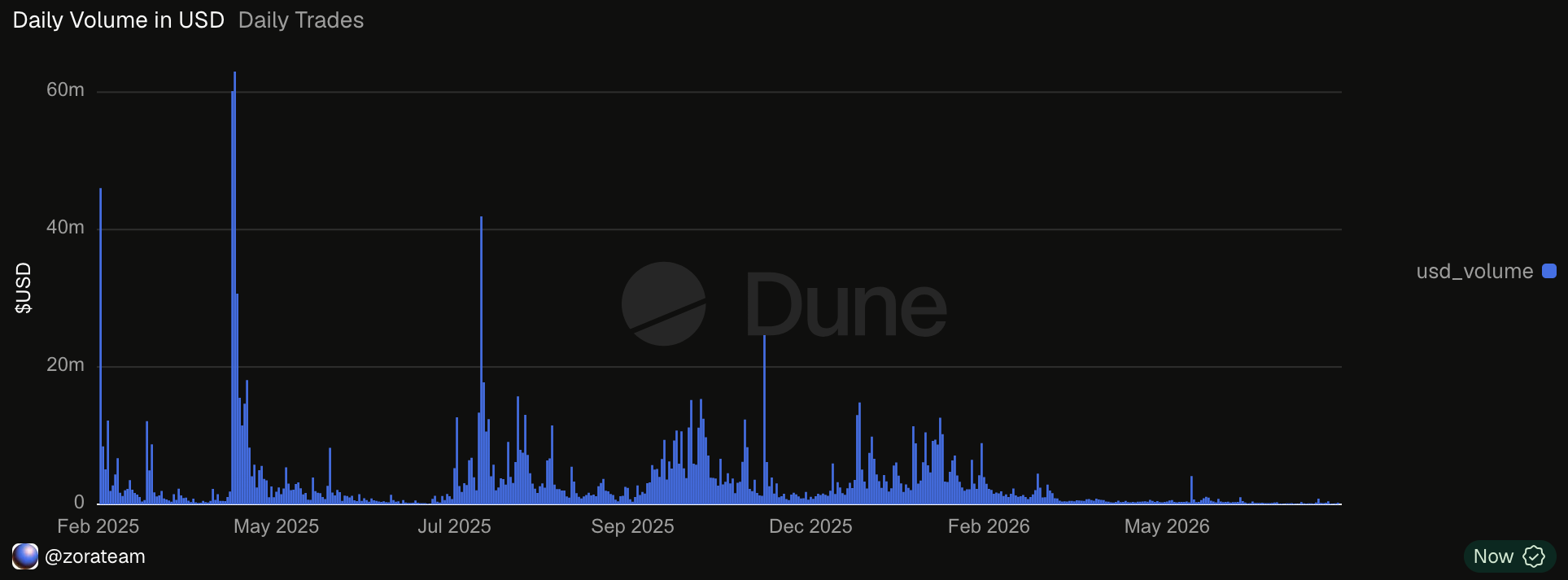
Overall, the project failed to take off in the way Coinbase had hoped. Data compiled by Dune Analytics user “@zorateam” shows that the daily volume on Zora has reached lows of under $100,000 in the past few months.
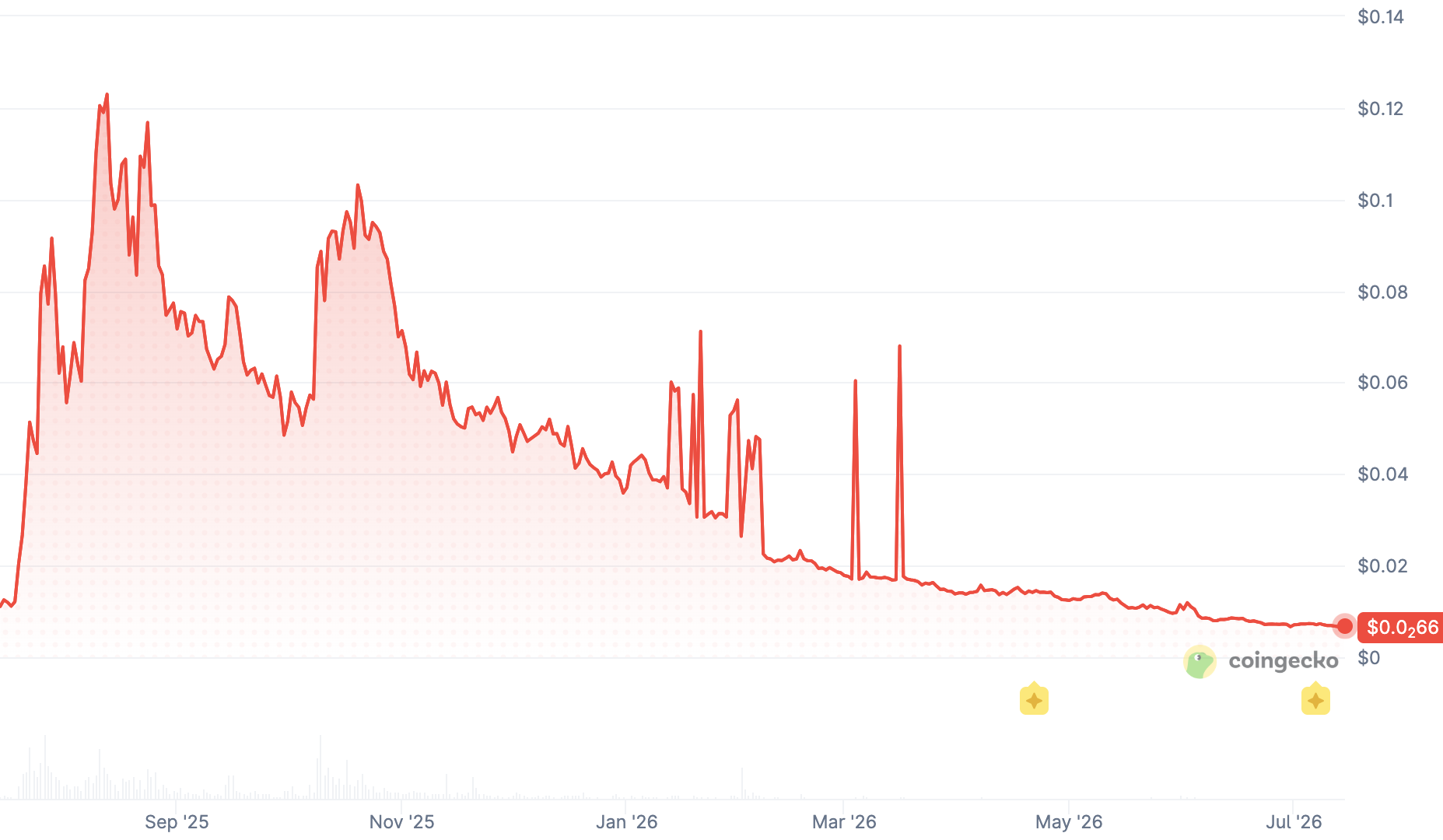
In May 2026, the daily volume almost reached $63 million, resulting in a 99.8% decrease in daily volume. The price of the Zora token is also down almost 96% since it’s all-time-high in August 2025.
Got a tip? Send us an email securely via Protos Leaks. For more informed news and investigations, follow us on X, Bluesky, and Google News, or subscribe to our YouTube channel.